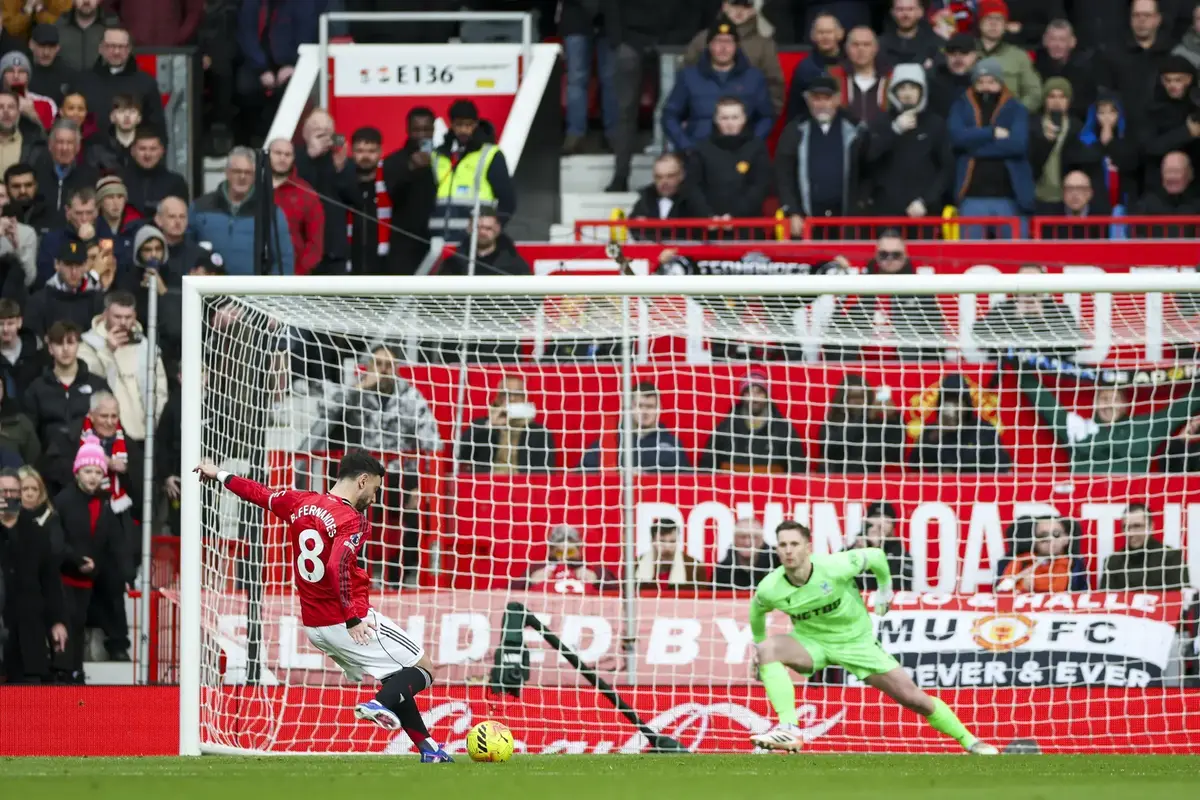
The beautiful game of football is often punctuated by moments of high drama and contentious decisions, none more so than when a red card is issued. One such incident that sparked significant debate unfolded during a high-stakes match between Manchester United and Crystal Palace. A pivotal moment saw a Bruno Fernandes penalty awarded, but it was the preceding crystal palace foul that truly became the talking point, as it resulted in a direct red card for a Palace defender. This decision, initially met with shock by some, was a direct application of football's intricate rules regarding the denial of a clear goal-scoring opportunity. Let's dissect this incident, exploring why the referee’s decision, upheld by VAR, was not just justified but mandated by the Laws of the Game.
The Incident Unpacked: The Crystal Palace Foul That Changed the Game
The match was finely poised when Manchester United launched a dangerous attack. A precise through ball cut through the Crystal Palace defence, sending a United attacker racing towards goal. With only the goalkeeper left to beat, it seemed a certain goal was on the horizon. However, a Crystal Palace defender, in a desperate attempt to thwart the attack, made contact with the United player.
The nature of this contact was crucial. Descriptions varied, with some observers noting it as "insanely small," while others described a clear "pull" or "grab on the shoulder." What was undeniable, however, was its effect: the attacker's run was impeded, their momentum disrupted, and a clear goal-scoring chance was eradicated. The foul occurred within the penalty area, leading to the immediate award of a penalty kick, which Bruno Fernandes duly converted. Yet, the greater consequence was the straight red card shown to the Crystal Palace player, reducing their team to ten men and profoundly altering the complexion of the game.
Distinguishing Between a Foul, a Penalty, and a Red Card
To fully grasp the magnitude of this decision, it’s essential to understand the progressive nature of fouls in football:
- A Foul: Any unfair action by a player that violates the Laws of the Game, such as a trip, push, or handball, punishable by a free-kick.
- A Penalty: A direct free-kick awarded when a foul punishable by a direct free-kick (e.g., tripping, holding, pushing) occurs inside the offending team's own penalty area.
- A Red Card: Issued for more serious offences, leading to the immediate expulsion of a player from the game. These can range from violent conduct and serious foul play to receiving two yellow cards, or, critically in this scenario, denying a clear goal-scoring opportunity.
The crystal palace foul was not just a mere infringement; it met specific criteria that elevated it beyond a simple penalty and into the realm of a red card offence, primarily due to the denial of a goal-scoring opportunity and the manner in which it was committed.
Denial of a Goal-Scoring Opportunity (DOGSO): The Heart of the Red Card Decision
The core reason behind the red card lies in the football law concerning the Denial of a Clear Goal-Scoring Opportunity (DOGSO), as outlined in IFAB (International Football Association Board) Law 12. This rule is designed to ensure that players do not gain an unfair advantage by deliberately preventing a clear goal. For an offence to be considered DOGSO, several factors are assessed:
- Distance between the offence and the goal: The closer to the goal the foul occurs, the more likely it is to be a DOGSO. In this instance, the Man Utd attacker was practically through on goal.
- General direction of play: The attacker must be moving towards the opponent's goal, with a clear path. This was evidently the case.
- Likelihood of keeping or gaining control of the ball: The attacker must realistically be able to continue their run and get a shot away. The through ball had put the United player in a prime position.
- Location and number of defenders: Crucially, there should be no other defenders with a realistic chance of intercepting the ball or challenging the attacker. In this scenario, the Palace defender was the last man, and his foul was the only thing preventing a likely goal.
Given these criteria, the crystal palace foul clearly met the requirements for DOGSO. The attacker was through, heading directly for goal, and only the illegal intervention prevented them from continuing. For a deeper understanding of these specific regulations, you might find our detailed analysis useful: Crystal Palace Red Card: Unpacking the Rules of a Goal-Denying Foul.
The Nuances of Contact: "Small" vs. "No Attempt to Play the Ball"
A point of contention from some fans was the perceived "small" amount of contact. However, the severity of the foul's *force* is often secondary to its *effect* and *intent* in DOGSO situations. Even a slight pull or nudge can be enough to significantly unbalance a player moving at speed, costing them crucial milliseconds or disrupting their control, thereby denying the opportunity. The key factor that pushed this particular crystal palace foul to a red card, rather than just a yellow for DOGSO, was the lack of a genuine attempt to play the ball.
Since a rule change in 2016, if a foul committed inside the penalty area is for DOGSO, and the defending player *attempts to play the ball* (e.g., a mistimed tackle), the punishment is a yellow card and a penalty. This change was implemented to avoid the "triple punishment" of penalty, red card, and suspension. However, if the foul involves holding, pulling, pushing, or tripping without any genuine attempt to play the ball, it remains a red card and a penalty. The Palace defender's action was judged as a deliberate impediment – a grab or pull – without making any legitimate play for the ball, thus falling into the red card category.
The Referee's Perspective and VAR's Role
Referees operate under immense pressure, making split-second decisions in the heat of the moment. In this particular instance, the on-field referee's initial decision to award a penalty was clear. The subsequent red card, while immediate, required a precise application of the DOGSO rule.
The Video Assistant Referee (VAR) system plays a crucial role in such situations. Its purpose is to review "clear and obvious errors" or "serious missed incidents." When the VAR reviewed the crystal palace foul, they would have meticulously checked all the DOGSO criteria: the position of the attacker, their direction, the proximity to goal, and critically, whether the defender made any genuine attempt to play the ball. Given the rules, the VAR would have confirmed that the defender's action constituted a denial of a clear goal-scoring opportunity without attempting to play the ball, thus validating the red card despite the penalty award.
The Impact of Man Utd's Pressure on the Foul
It's also worth noting the broader context of how the foul came about. As highlighted in some discussions, "Man Utd's effort forced the Crystal Palace defenders into a foul." This isn't merely an observation; it's a testament to the tactical pressure applied by the attacking team. High pressing, rapid transitions, and intelligent off-the-ball runs can stretch even the most organized defences thin. When defenders are constantly being pulled out of position or are forced into last-dditch actions, the likelihood of committing a costly error, like the crystal palace foul, increases significantly. It underscores how relentless attacking play can directly contribute to defensive indiscretions that change the course of a game.
To explore how offensive tactics can lead to such pivotal moments, consider reading our analysis: Did Man Utd's Pressure Force Crystal Palace into a Costly Foul?
Practical Takeaways and Tips
- For Defenders: Understanding DOGSO is paramount. If you must foul, always try to make a genuine attempt to play the ball when inside the box to mitigate the red card risk (though a penalty will still be given). Staying goal-side, anticipating runs, and communicating effectively are far better preventative measures.
- For Fans: Familiarize yourself with the IFAB Laws of the Game, particularly Law 12. Understanding these intricate rules enhances appreciation for the complexity of refereeing decisions and the strategic nuances of the sport.
- Fact: The IFAB Laws are dynamic, with annual updates. Small revisions, such as the 2016 DOGSO change, can significantly alter how incidents are adjudicated.
The crystal palace foul that led to a Bruno Fernandes penalty and a red card was undoubtedly a controversial moment that sparked widespread debate. However, when viewed through the lens of the official Laws of the Game, particularly those governing the Denial of a Clear Goal-Scoring Opportunity and the specifics of "no attempt to play the ball," the referee's decision was a correct and mandated application of the rules. This incident serves as a stark reminder of the fine margins in professional football, where a split-second decision by a player, often forced by intense pressure, can have monumental consequences for their team, both in terms of the immediate scoreline and playing with a numerical disadvantage. Understanding these complex rules is crucial for both players and fans to truly appreciate the strategic depth and occasional controversies that define the beautiful game.